
Linear Feet Calculator
Estimate how many linear feet of trailer space your pallets or handling units may use.
Freight Linear Feet Calculator
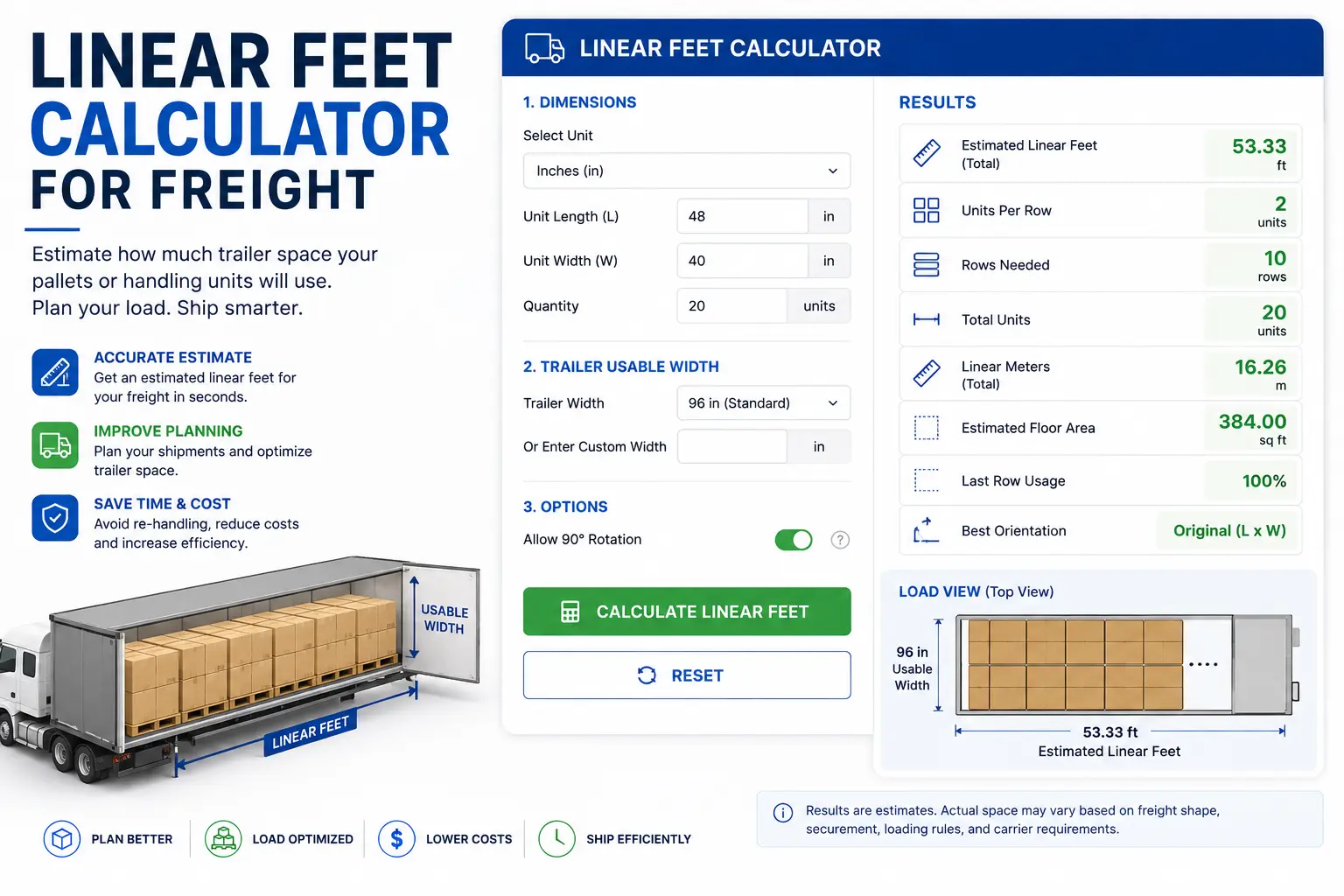
Use our Linear Feet Calculator to estimate trailer space required for your pallets or handling units. Simply enter the unit length, width, quantity, and the trailer width, and let our tool calculate an estimated linear footage for your load.
How to use the linear feet calculator
- Choose the dimension unit.
- Choose the trailer’s usable width.
- Enter the unit length.
- Enter the unit width.
- Enter the quantity of units.
- Check the option to allow a 90-degree rotation if desired.
- Click Calculate Linear Feet.
The calculator will then provide an estimated trailer space, number of units per row, number of rows, floor area of units, and best orientation for your load.
FAQs
Linear feet in freight shipping refer to how much horizontal length of the trailer floor your shipment occupies.
You need to estimate how many units fit across the width of the trailer, then determine how many rows you need, and multiply the number of rows by the length of the unit.
Linear feet is important in LTL shipping as it provides an approximation of the space that a shipment will take up on a trailer. This is particularly important for large palletized loads.
Yes. The calculator allows you to test a 90-degree rotation of the pallet or handling unit in order to see if doing so will reduce the amount of trailer space needed.
Yes. You can choose one of the standard width presets available or enter a custom usable width for your trailer.
No. The calculation results are estimates and should not be considered perfectly accurate. Actual space usage may differ depending on freight shape, securement, carrier rules of carriage, and loading practices.