
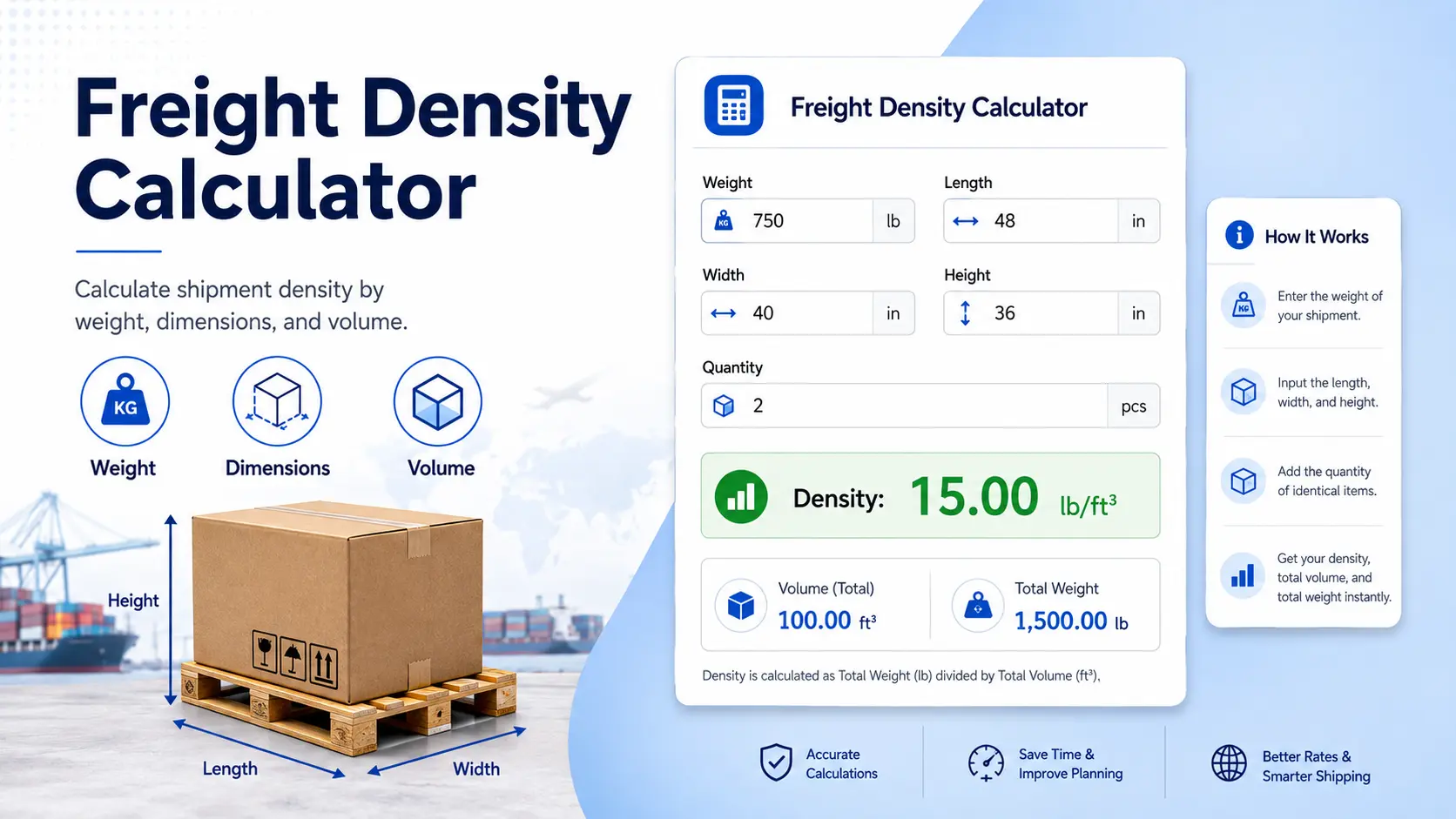
Freight Density Calculator
Enter your shipment dimensions and weight to calculate density in pounds per cubic foot.
Freight Density Calculator
Utilize our Freight Density Calculator for a rapid calculation of your shipment’s density based on weight and dimensions. This calculation is performed in lb/ft, also providing shipment volume and total weight.
Freight Density Calculator
Place the calculator tool below.
How to Use the Freight Density Calculator?
- 1. Input shipment length.
- 2. Input shipment width.
- 3. Input shipment height.
- 4. Input shipment weight.
- 5. Ensure the appropriate dimension and weight units have been chosen.
- 6. Input quantity, if required.
- 7. Press the Calculate Freight Density button.
When measuring your shipment, ensure it is fully packaged, including the pallet and casing, all packaging material, and any overhang.
Frequently Asked Questions
The amount of space a shipment takes up in relation to how much weight it possesses. Typically measured in pounds per cubic foot.
(Weight/Cubic Feet)=Density
Yes, when calculating the freight density, you must take in the outside dimensions and add the pallet and casing as well.
No, there are other criteria for determining freight class that weigh as heavily, if not more so than freight density.
It can assist with determining estimated freight class and getting precise shipment data for your LTL shipments.